RakBid: Connecting Buyers and Sellers of Specialized Equipment
Client project
Information architecture / Marketplace UX
Helping buyers and sellers find and trade used warehouse racking.
Overview
RakBid connects buyers and sellers of used warehouse racking through equipment listings, wanted ads, and direct negotiation. I designed the user experience and interface across both sides of the marketplace, from discovering equipment to submitting and discussing a bid or offer.
The Challenge
Warehouse racking is a specialized purchase. Buyers need to evaluate equipment specifications, quantities, condition, and price, while sellers may have inventory containing several different equipment types. The challenge was to make those details manageable while giving both parties a clear path toward a deal—including when the equipment a buyer needs is not already listed.
Context + Constraints
The marketplace needed to support two complementary journeys: buyers responding to available inventory and sellers responding to wanted ads. Transactions could involve selected items and quantities within a larger listing, so a single price and a generic contact form would not adequately represent the negotiation.
Key Design Decisions
The design balances structured equipment information with open conversation. Item-level quantities and pricing make proposals specific, while connected message threads leave room for questions and negotiation. Listings and wanted ads share familiar browsing patterns, but their response flows reflect the different responsibilities of buyers and sellers.
Implementation
I mapped the information architecture and key user flows before designing the connected screens in Figma. My work covered search and filtering, listing creation and management, wanted ads, bids, offers, and conversations. Across those screens, I emphasized a consistent hierarchy for equipment details, transaction summaries, and next actions.
The "So What"
The resulting design connects discovery, proposal creation, and negotiation within a coherent marketplace experience. It supports both available inventory and unmet demand, with item-specific proposals that preserve the context of each conversation. The central design takeaway is that marketplace UX depends as much on the structure of the transaction as on the quality of the browsing experience.

Home Page
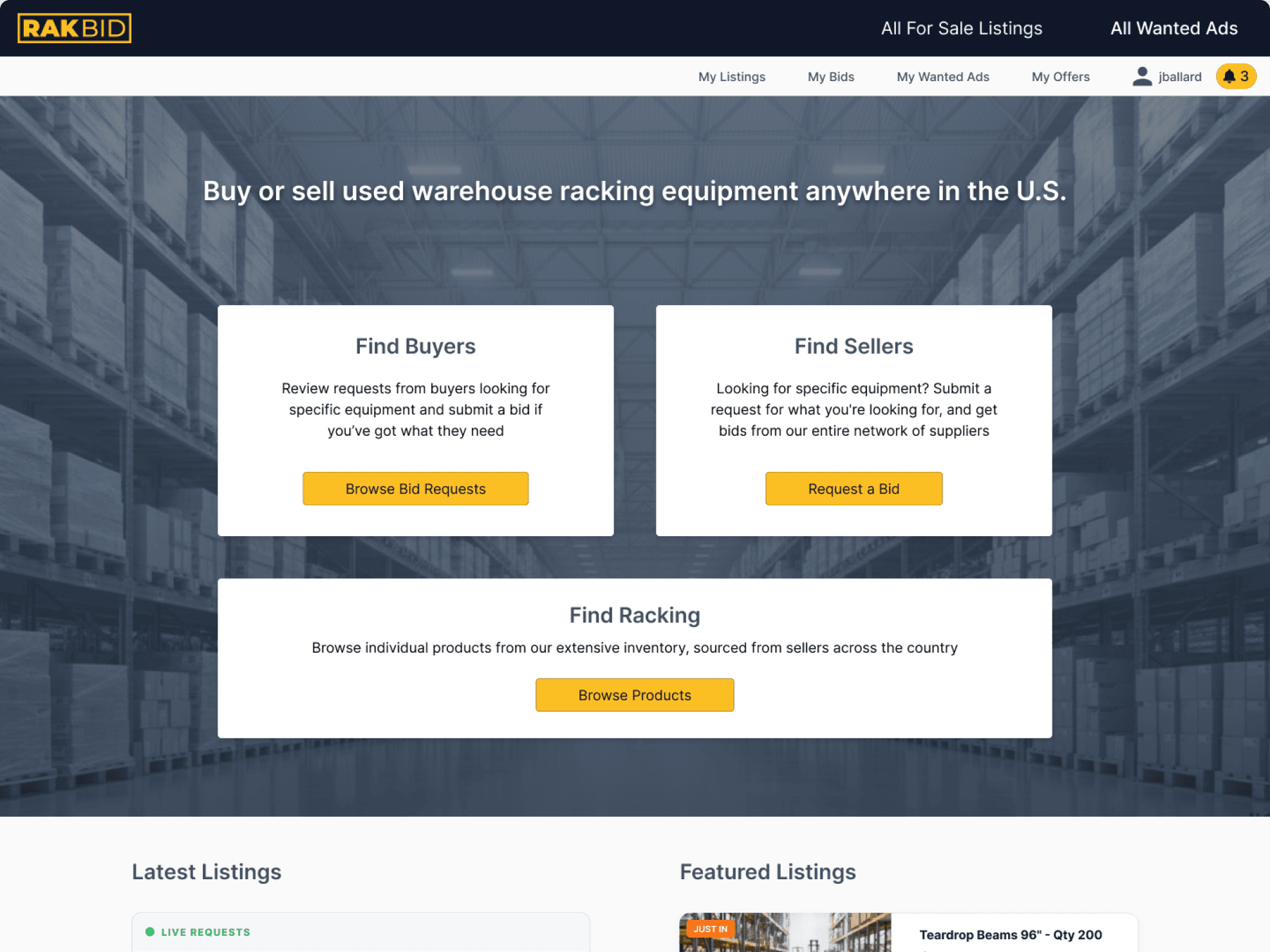
The RakBid homepage gives buyers and sellers clear paths to browse used warehouse racking, find buyers, or request equipment. Featured listings and product categories make the marketplace easy to explore.
For-Sale Listings
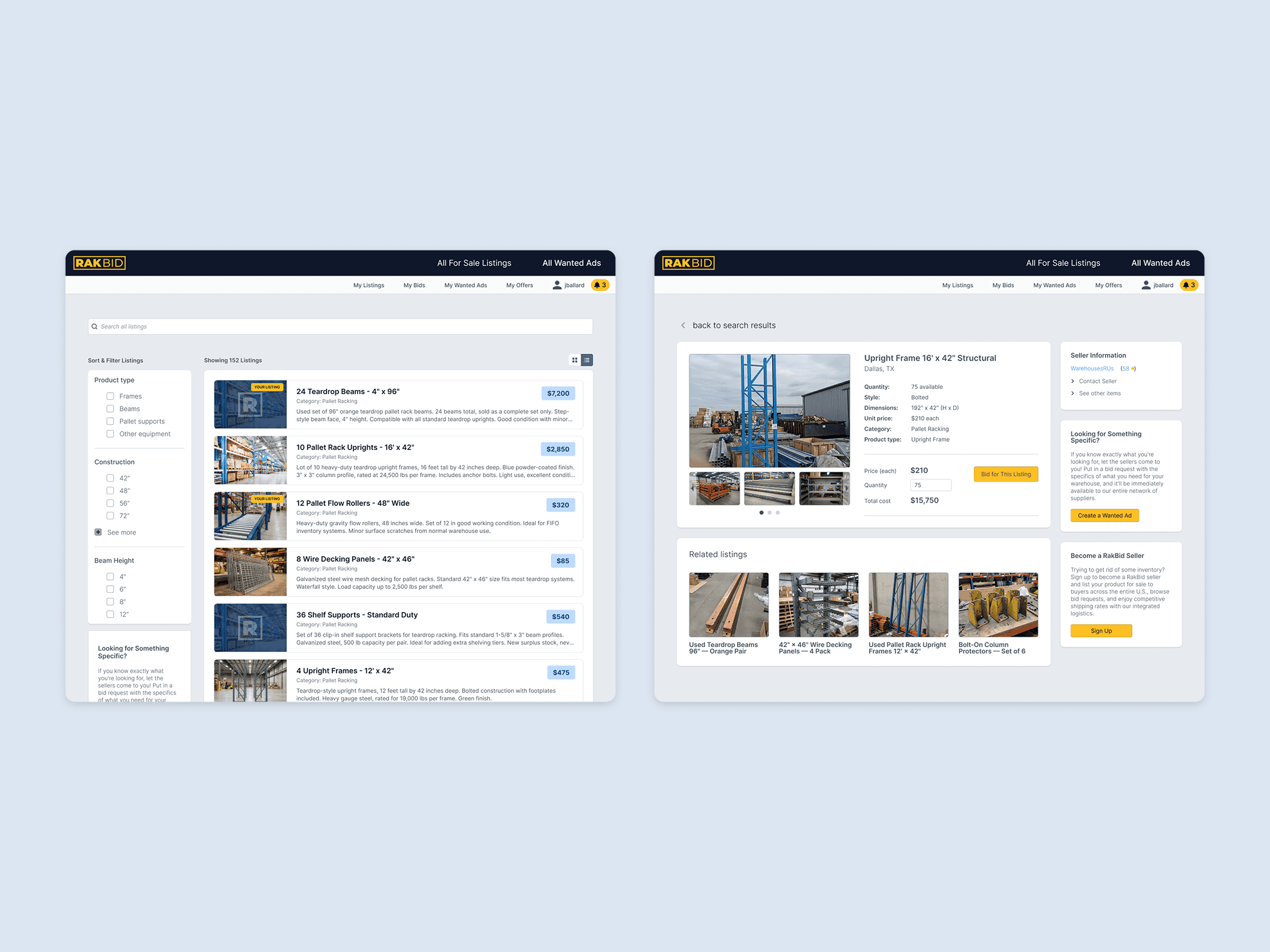
The listings experience pairs search and equipment filters with a clear results view. Buyers can compare available racking and move from a listing to its photos, specifications, price, and bid action.

Listing Details
Seller screens for creating and managing a listing. Each listing can include multiple equipment types, photos, quantities, and prices, with incoming bids visible alongside the published details.

Bid Details
The bid flow lets buyers select specific items from a listing, enter an offer, and review the total. A connected message thread supports questions and negotiation with the seller.

Wanted Ads
Wanted ads help sellers discover buyers looking for particular warehouse racking equipment. Search, filters, and grid or list views make requests easy to scan.

Wanted Ad Details
Buyers can define the equipment and quantities they need in a wanted ad. The detail view presents those requirements to sellers and keeps received offers organized in one place.

Offer Details
Sellers can respond to a wanted ad with item-specific quantities, prices, photos, and notes. The offer detail screen gives buyers a clear summary and a place to discuss the proposal.

Site Diagram
One of RakBid's initial site diagrams maps the marketplace’s buyer and seller journeys, from browsing inventory and posting requests to submitting bids, making offers, and managing accounts.
I like to show people things like this and say, "This is what good UX design really is."
All selected work